The implementation of the European Union’s Entry-Exit System (EES) at Greek land borders has led to severe congestion, with tourists from the Balkans waiting two to three hours at the Evzoni crossing with North Macedonia, according to a report by Kathimerini.
The system, which began operating at Greek entry points on April 10, replaces traditional passport stamps with biometric registration using facial photographs and digital fingerprints for third-country nationals. At Evzoni, each check has increased from 20-30 seconds to 2-3 minutes per person.
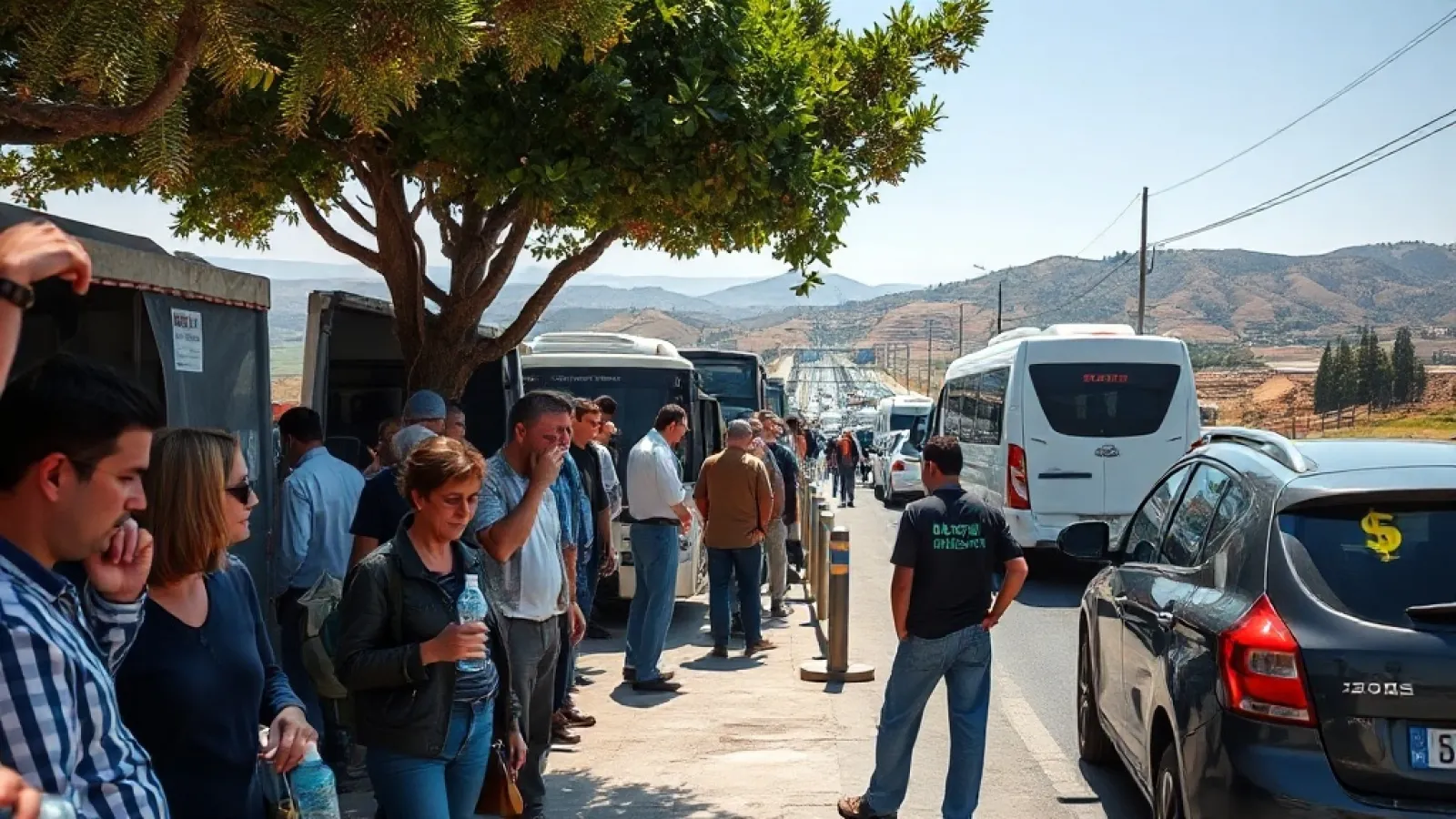
On a Saturday morning in early June, a long queue of cars and tourist buses formed at Evzoni. Tourists from Serbia, North Macedonia, Kosovo and Montenegro, who had set off at dawn to avoid bottlenecks, found themselves waiting in the heat. Boena, a Serbian tourist who has visited Greece every summer for 40 years, said: “We, Serbs, are very angry. It’s not right what’s happening!” Nicholas, 67, from North Macedonia, said: “I could have gone to Albania. But I’ve been coming to Leptokarya for the last 30 years. It’s our second home.”
During peak hours, the biometric system was temporarily suspended, allowing passport-only checks. Deputy Minister of the Interior Kostas Gioulekas said the suspension is a “temporary measure” applied during peak hours. Authorities are trying to create additional checkpoints, including using a disinfection ramp as a car passage.
Christos Kargiotoudis, president of the Kilkis police officers association, called the measures an “admission of failure,” citing spatial planning problems and lack of internet connectivity. “The optical fiber never reached the customs office,” he said. The system has crashed several times, remaining inactive for up to an hour.
Renovation of the Kipoi border station is still underway, and a tender for €23.6 million in projects at Evzoni has been announced but no contractor appointed.
Why it matters
The delays threaten tourism in Central Macedonia, which relies heavily on Balkan visitors. Greece welcomed approximately 12 million visitors via road in 2024. Grigoris Tasios, president of the Halkidiki Hotel Association and vice president of SETE, said: “What is happening is preventing people from coming.” Iraklis Tsitlakidis, president of the Pieria Hoteliers Association, reported a decrease in occupancy compared to last year and warned that Greece risks losing tourists to cheaper, more accessible destinations like Albania or Egypt.
At Thessaloniki’s Makedonia International Airport, biometric screening was not fully implemented for British nationals, but delays for third-country nationals have increased four to five times. Pre-registration booths and electronic portals have been installed but are not yet operational. Ioannis Zermas of Fraport Greece called for an EU digital pre-registration system, similar to those used by the US and Britain, to reduce waiting times.