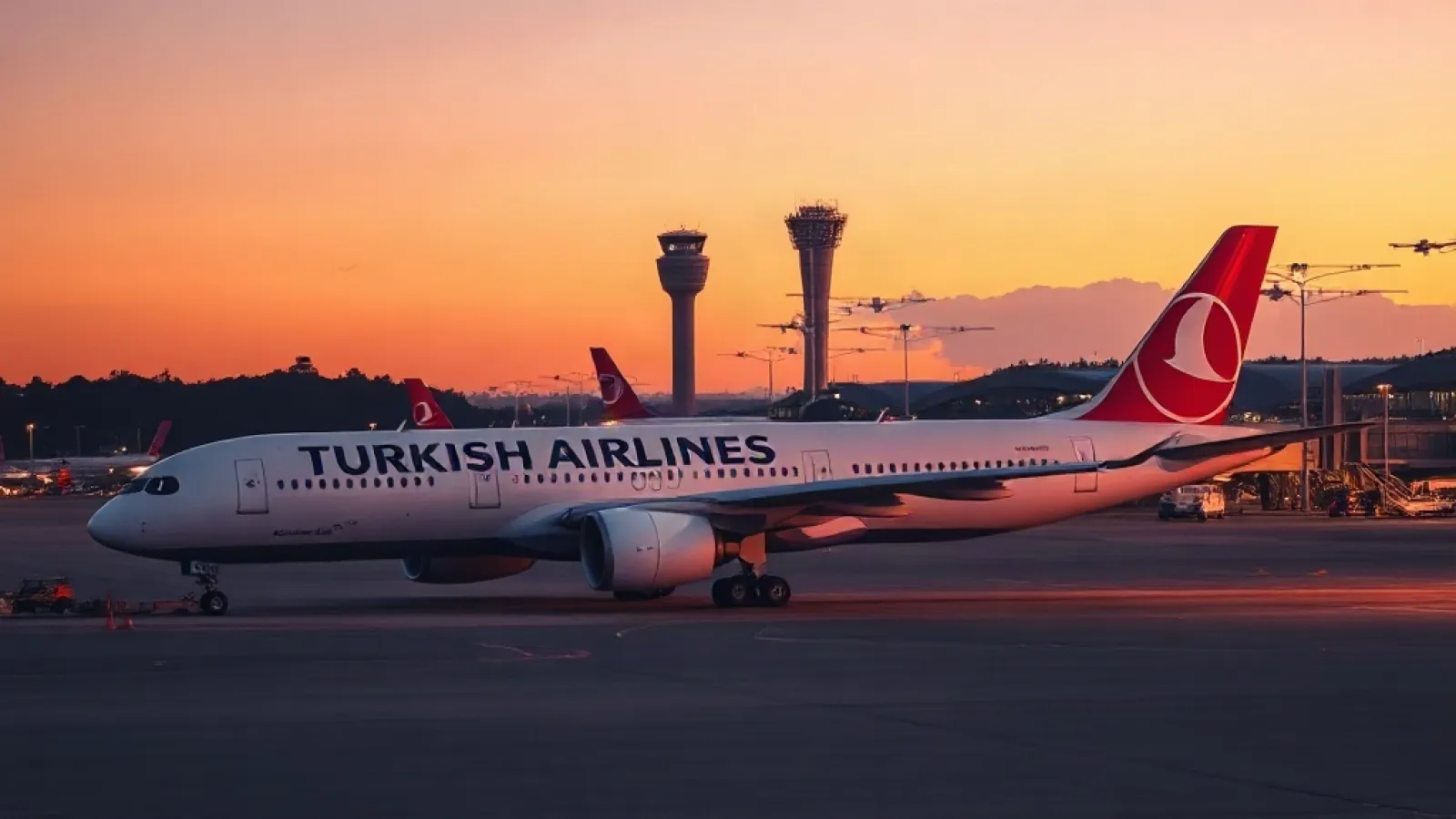
Larnaca and Paphos airports have ranked first among European airports for direct flight connectivity growth, according to the June ACI Europe “Air Connectivity Report 2025”. The increase rate for 2025 compared to 2024 stands at 18%. Cypriot airports also rank second among European countries for increased direct air connectivity in 2025 versus 2019, with a growth rate of 22%.
The data underscores a shift towards year-round tourism in Cyprus. Tourism authorities have long aimed to extend the tourist season beyond the summer months, and recent records show that winter is no longer considered a “dead” period. Passenger numbers have been rising steadily, with August 2024 exceeding 1.6 million passengers for the first time, and August 2026 expected to set a new record. Estimates indicate that total passenger traffic in 2026 will surpass 13.5 million.
Currently, 58 airlines operate 158 routes to 39 countries from Cyprus. This year, 11 new routes from Larnaca and 4 from Paphos have been launched, of which 8 are year-round. New Larnaca routes include Haifa, Barcelona, Timisoara, Venice, Tirana, Riyadh, Skopje, Dublin, Sibiu, Sandefjord, and Suceava. New Paphos routes are Yerevan, Düsseldorf, Haifa, and Lyon. New airlines operating from Larnaca this year include Saudia, Air Haifa, SkyUp, Animawings, and DAN Air, while Paphos welcomed Air Haifa, FlyOne, and WizzAir.
Airline seats for winter 2025-26 total 4.7 million. Winter 2024-25 seats versus winter 2019-20 increased by over 1.1 million, representing growth exceeding 40%. The top 15 airlines carry approximately 75% of total passengers to and from Larnaca and Paphos airports: Wizz Air, Ryanair, Aegean Airlines, easyJet, TUI Group, Jet2.com, British Airways, Cyprus Airways, Sky Express, El Al Israel Airlines, Lufthansa German Airlines, Israir Airlines, SunClass Airlines, Austrian Airlines, and Arkia Israeli Airlines.
Maria Kouroupi, Director of Aeronautical Development, Marketing and Communications at Hermes Airports, told philenews that steadily increasing passenger numbers confirm the company’s strategy for strengthening Cyprus connectivity. The agreements concluded with airlines are already bearing fruit, resulting in a balanced flight programme and types of airlines operating in the Cypriot market. Kouroupi noted that Hermes Airports’ long-term goal remains securing year-round connectivity so Cyprus maintains uninterrupted presence on European aeronautical maps. Priority involves introducing new routes to important European cities currently lacking direct connections, further strengthening the country’s position in the aviation sector.
Why it matters
The sustained growth in air connectivity positions Cyprus as a stronger year-round destination, reducing its historical dependence on summer tourism. For tour operators and bedbanks, the expansion of winter schedules and new routes opens up opportunities to package shoulder-season and winter holidays. The increase in airline capacity—particularly the 40% rise in winter seats compared to pre-pandemic levels—signals that carriers see sustainable demand beyond peak months. This trend may encourage hotel investors to fund year-round properties and DMCs to develop off-season itineraries. However, the concentration of traffic among 15 airlines carrying 75% of passengers also highlights a degree of carrier dependency that the market should monitor.