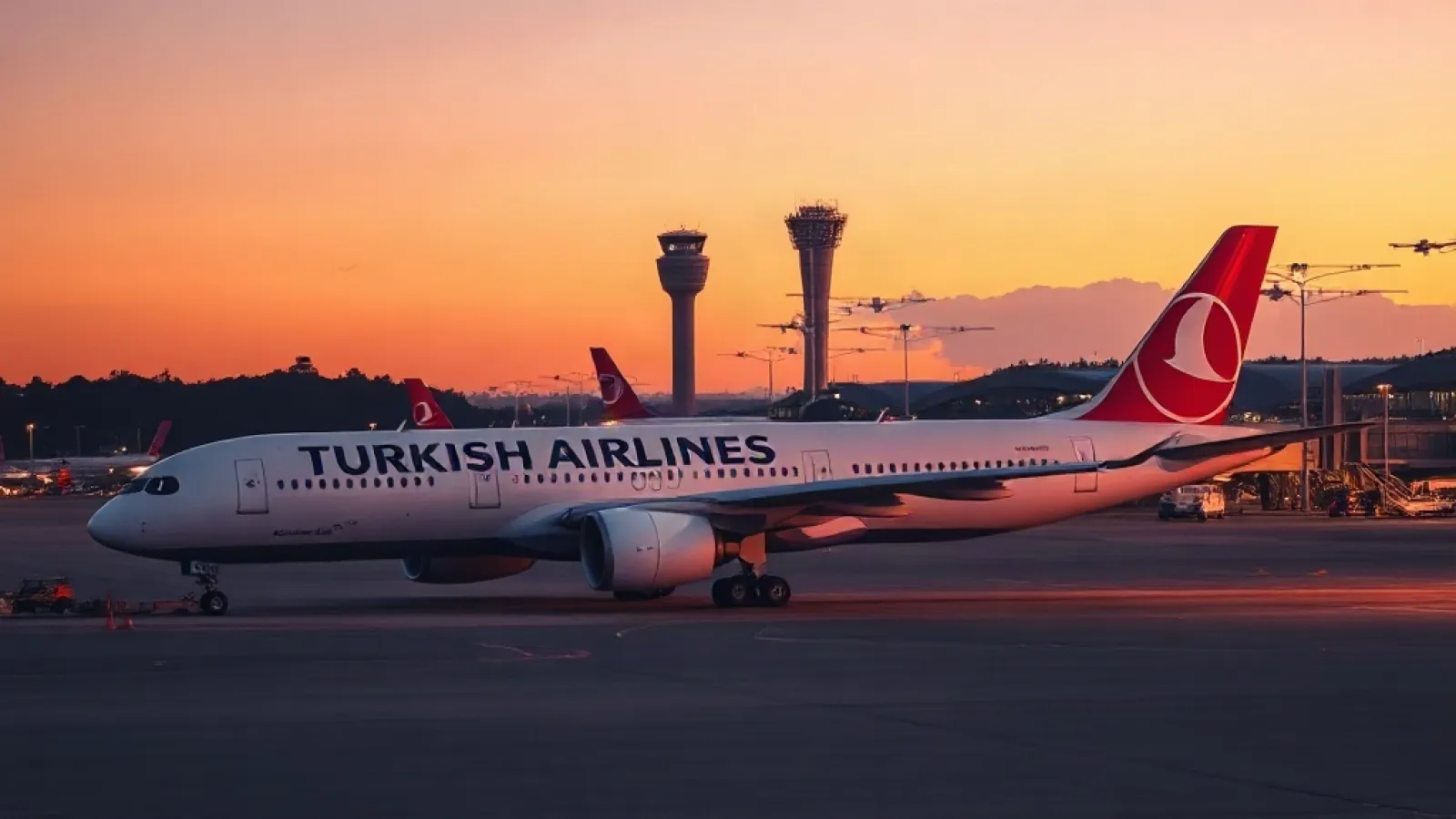
Turkish Airlines has added Timișoara to its Romanian network, making it the carrier's fourth destination in the country after Bucharest, Cluj-Napoca, and Constanța. The new service, launched with five weekly frequencies, brings the airline's total weekly flight frequency in Romania to 47.
An inauguration ceremony at Timișoara Traian Vuia International Airport was attended by executives from Turkish Airlines and the airport, highlighting the route's role in improving regional connectivity.
Turkish Airlines CEO Bilal Ekşi said: "Romania continues to be one of the strategically important markets for Turkish Airlines in Eastern Europe. The launch of our Timișoara flights expands our presence to a fourth city in the country, offering our guests more travel options while strengthening access to our Istanbul-centered unparalleled global network. We believe that this new route will contribute to both commercial and tourism activity in the region."
Timișoara, located in western Romania along the Bega River, is a key tourism destination known for its historical heritage and multicultural character. Often called "Little Vienna," the city attracts visitors with its spacious squares and vibrant cultural scene. Landmarks such as Union Square (Piața Unirii) and Victory Square (Piața Victoriei) offer a distinctive urban experience. Selected as the European Capital of Culture in 2023, Timișoara remains a prominent destination for both tourism and business, supported by its developed infrastructure.
The new route gives passengers access to Turkish Airlines' extensive global network of 358 destinations via Istanbul, further strengthening the airline's operations in Romania.
Why it matters
The expansion into Timișoara deepens Turkish Airlines' footprint in a market that the carrier describes as strategically important in Eastern Europe. With 47 weekly frequencies across four Romanian cities, the airline is positioning itself as a major connector between Romania and its Istanbul hub, which serves as a gateway to a network of 358 destinations.
For the travel trade, the added capacity on the Romania–Istanbul corridor could increase options for tour operators and corporate travel planners, particularly for connections beyond Istanbul to destinations across the airline's global route map. Timișoara's status as a European Capital of Culture in 2023 and its appeal as a tourism and business destination may support demand on the new route.
The move also reflects a broader pattern of Turkish Airlines expanding in secondary European cities, which could intensify competition with other carriers serving those markets. The increased frequency may put downward pressure on fares on some routes, benefiting travellers but challenging competitors' yields.