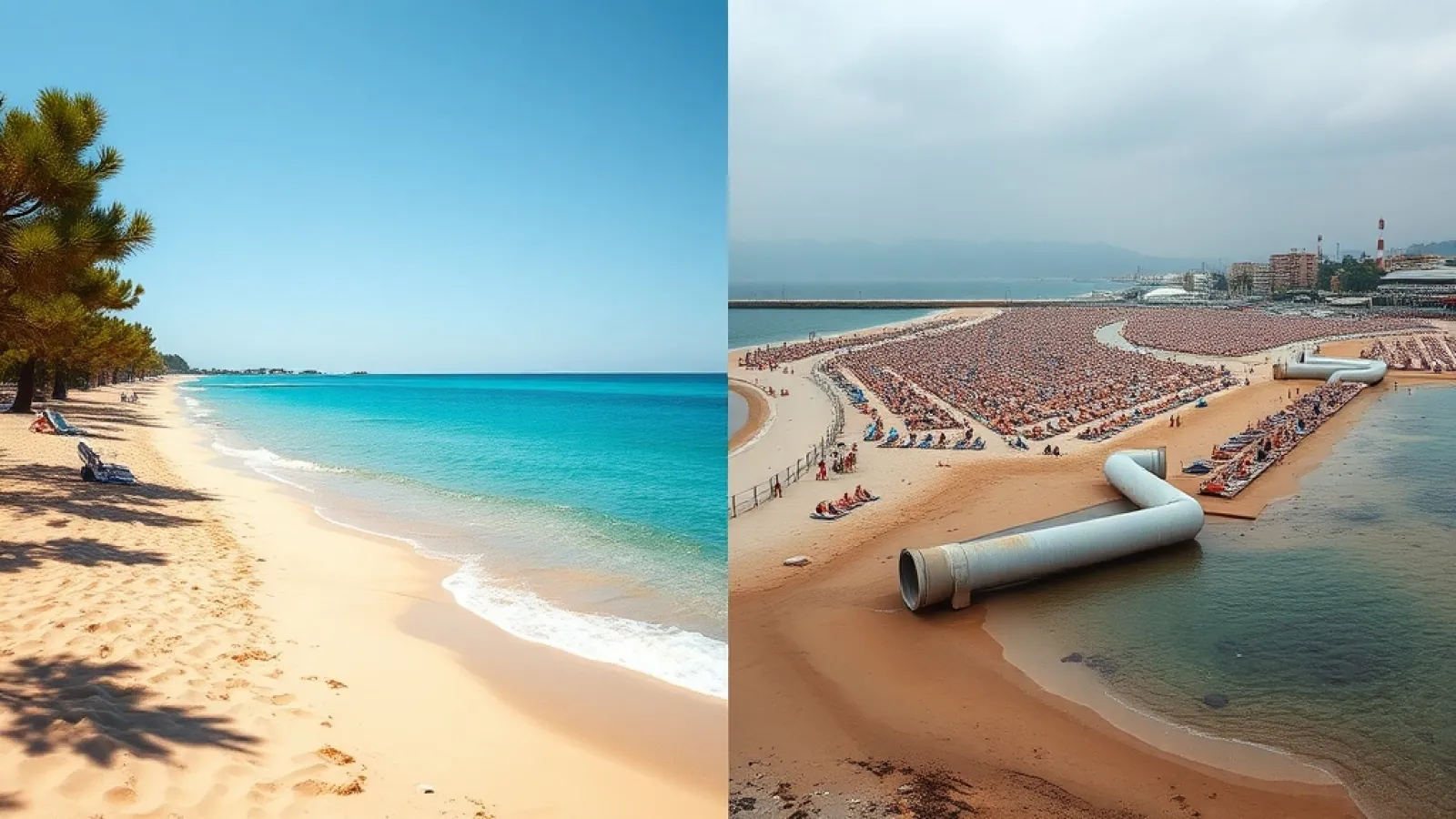
The European Environment Agency (EEA) has published its annual bathing water quality assessment, analysing 22,289 monitored sites across the European Union, Albania and Switzerland. The report, supported by the European Commission, reveals significant disparities in water quality among European destinations, with coastal waters generally outperforming inland lakes and rivers.
Key Findings
Overall, 85% of monitored sites achieved an 'excellent' rating, 96% met minimum safety requirements, and 1.5% were classified as 'poor'. However, national averages mask wide variations. The assessment measures microbiological indicators including E. coli and intestinal enterococci, which signal contamination from sewage or animal waste.
Lowest-Ranked Countries
Five countries recorded fewer than 70% of sites rated excellent:
- Albania: 16.8% excellent — the weakest performance. Rapid tourism growth has strained wastewater infrastructure, with nearly 23% of sites classified as poor.
- Hungary: 56.9% excellent — inland waters like Lake Balaton face challenges from shallow depths and natural plankton activity.
- Poland: 58.7% excellent — agricultural runoff and urban wastewater pressures affect Baltic coast and inland lakes.
- Estonia: 64.0% excellent — Baltic coastal conditions and ecological changes influence quality.
- Belgium: 67.9% excellent — dense population, industrial activity and complex river networks impact waters.
Top Performers
- Cyprus: 100% excellent rating across all monitored sites.
- Greece: Among the cleanest, reinforcing its reputation for high-quality beaches.
- Bulgaria: Strong results among coastal destinations.
- Austria: Demonstrated that inland countries can maintain very high standards for lakes and freshwater tourism.
Coastal vs Inland Waters
The report highlights a clear divide by water type: 88% of coastal waters rated excellent, compared to 78% of inland lakes and only 47% of rivers. Coastal waters benefit from tidal movement, larger volumes and saltwater dilution.
Future Monitoring
The EEA plans to expand assessments to include emerging contaminants such as PFAS, microplastics and pharmaceutical residues, moving beyond bacterial indicators to broader environmental health.
Why it matters
For tour operators and DMCs planning summer programmes, the data underscores the importance of site-specific water quality checks rather than relying on national reputations. Destinations with poor averages, such as Albania, still have many safe beaches, but the risk of poor-quality sites is higher. Conversely, Cyprus and Greece offer near-certain excellent conditions, a strong selling point for premium beach packages. The planned expansion to chemical pollutants will add another layer of due diligence for travel buyers sourcing lake and river destinations.