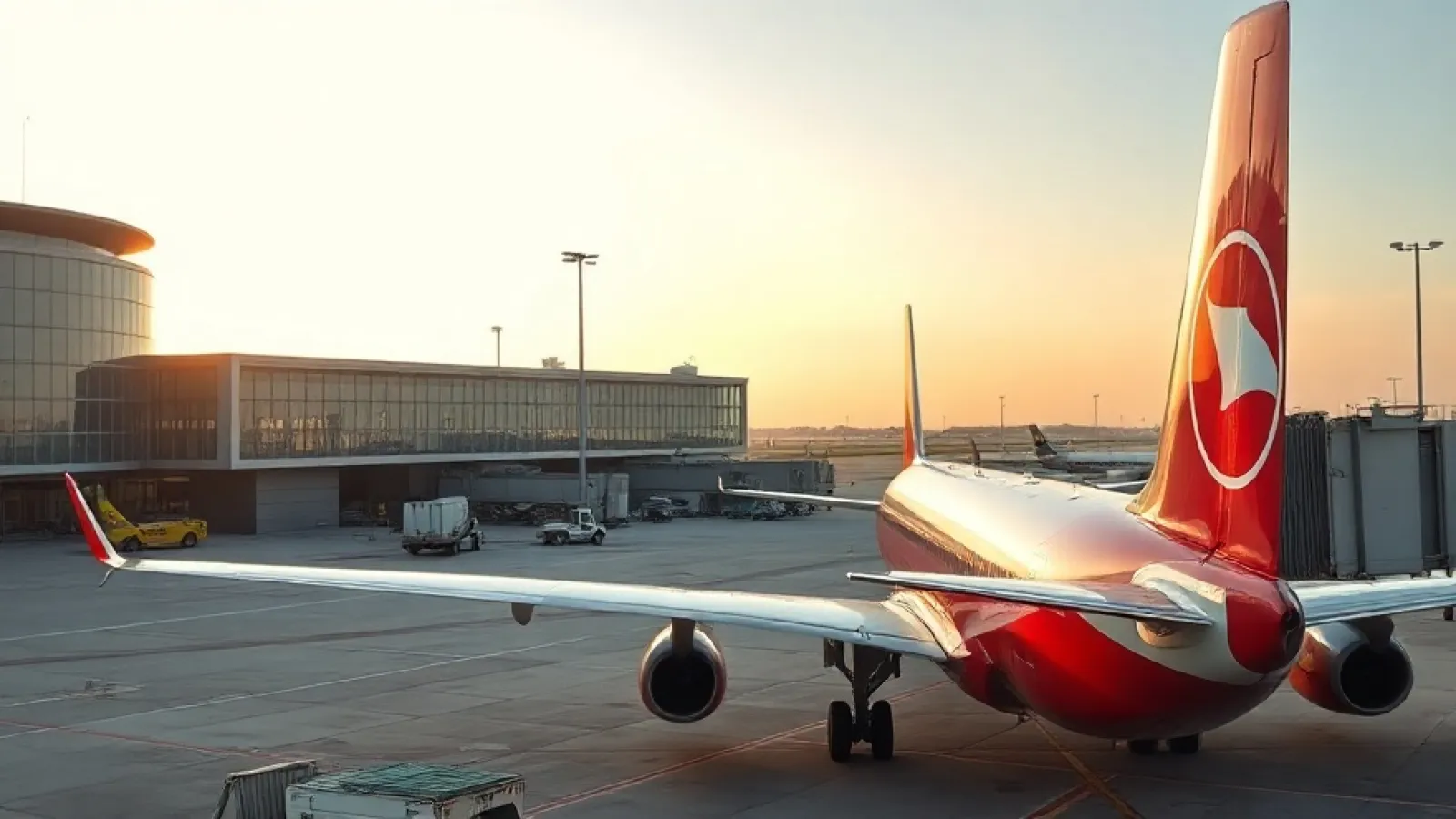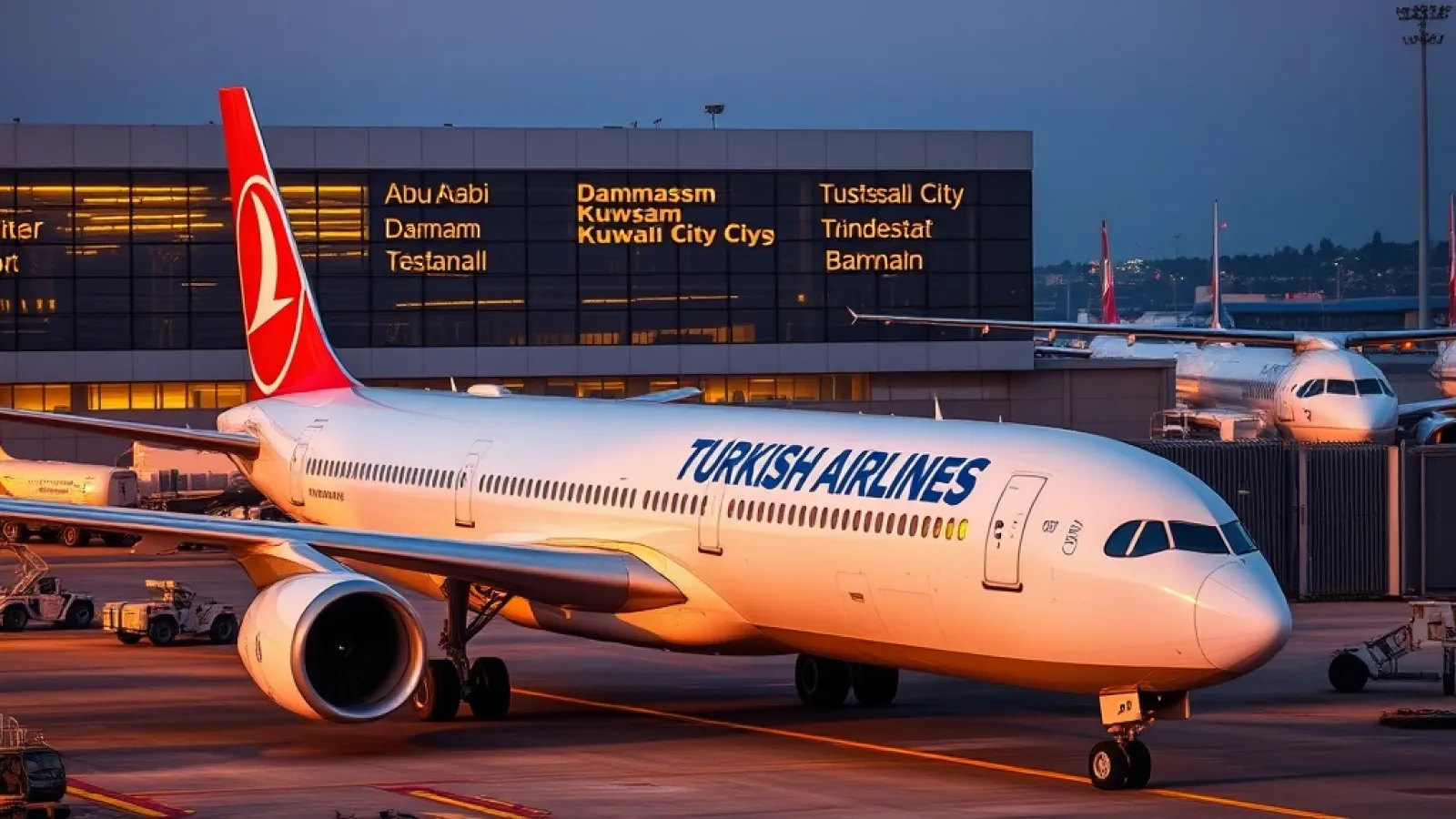
Turkish Airlines has resumed flights to Abu Dhabi, Dammam, Kuwait City and Bahrain, restoring key Middle East connections from its Istanbul hub. The phased return began with Abu Dhabi on 1 July 2026, followed by Dammam on 10 July, Kuwait City on 11 July and Bahrain on 16 July 2026. The airline had already reinstated services to Dubai in June 2026.
The restoration follows temporary service interruptions across the region due to geopolitical tensions and airspace restrictions. Turkish Airlines is rebuilding capacity gradually, basing each resumption on safety assessments, airport conditions and regional aviation stability.
Istanbul Airport, one of the world’s busiest transfer hubs, benefits from the renewed Gulf links. Passengers from Abu Dhabi, Dammam, Kuwait and Bahrain can now connect via Istanbul to Turkish Airlines’ broader network spanning Europe, Asia, Africa and the Middle East. The airline’s strategy leverages Istanbul’s geographic position as a bridge between continents.
The Abu Dhabi route strengthens ties with the UAE, a key source market for Turkish tourism. Gulf visitors frequently travel to Türkiye for leisure, shopping, medical tourism and cultural experiences. The Dammam service reconnects Istanbul with Saudi Arabia’s Eastern Province, a commercial centre for energy and trade, supporting business travel and leisure demand. Kuwait City and Bahrain routes expand Gulf connectivity, with Kuwait remaining an important outbound market for Türkiye and Bahrain developing as a regional financial and tourism hub.
The phased approach reflects a cautious recovery strategy as airlines worldwide restore Middle East services after disruptions. Turkish Airlines is balancing passenger demand, aircraft availability and safety requirements while rebuilding regional connectivity.
Why it matters
For the travel trade, the restored routes improve access to Türkiye for Gulf-origin leisure and business travellers, supporting hotel occupancy, tour bookings and destination spending in Istanbul and beyond. The phased resumption signals that operational conditions in the region are stabilising, allowing tour operators and DMCs to plan itineraries with greater certainty. Istanbul Airport’s role as a connecting hub is reinforced, offering onward feed to European and Asian destinations. The rebuild of Turkish Airlines’ Middle East network also indicates a measured return of capacity that could influence pricing and competition on Gulf–Europe itineraries.