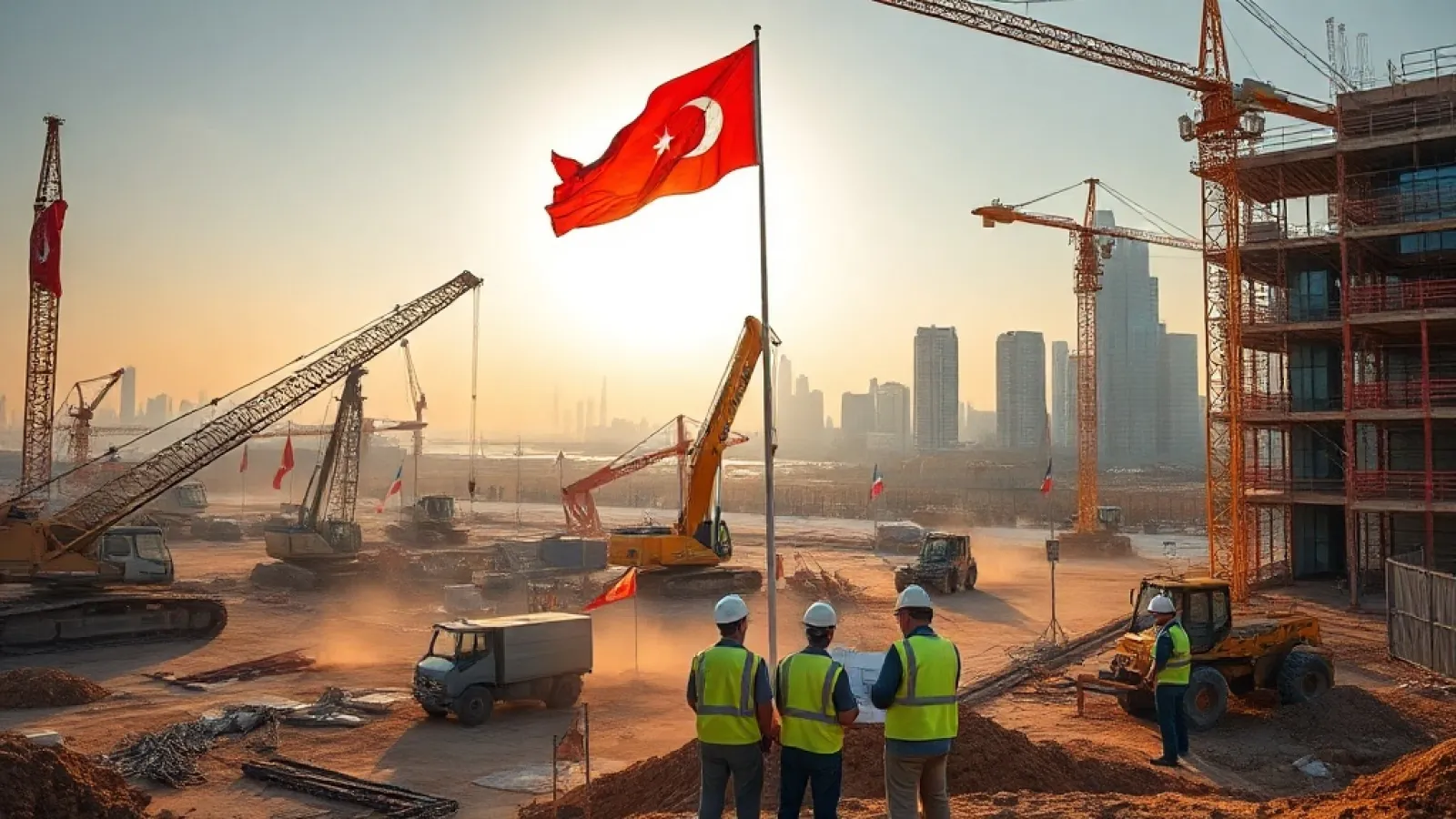
Turkish contractors secured 57 overseas projects worth a total of $2.7 billion in the first six months of 2026, according to data from the Trade Ministry. The projects were spread across 27 countries.
The Turkish contracting sector ranks among the world’s top 10 in terms of international contracting revenues. In 2021, the value of projects undertaken abroad rose to $32 billion, with 463 projects secured that year — the highest annual project value recorded by the industry. Project value declined to $20 billion in 2022, partly due to the effects of the COVID-19 pandemic. Last year, Turkish companies carried out 321 overseas projects worth a total of $25.7 billion.
Since 1972, the Turkish contracting industry has completed 12,931 projects in 138 countries, with a cumulative value of $566.1 billion. In terms of regional distribution, the Commonwealth of Independent States (CIS) accounted for the largest share of projects undertaken to date, representing 42.7 percent of the total value. The Middle East followed with a 25.4 percent share, while Africa ranked third with 18.5 percent.
Among the sectors in which Turkish contractors have undertaken the most projects, roads, tunnels and bridges ranked first. They were followed by housing and residential developments, power plants, railway projects and commercial centres.
Why it matters
The $2.7 billion secured in the first half of 2026 suggests a potential annual run-rate above $5 billion, though still below the $25.7 billion achieved in the full year 2025. The data indicates a continued reliance on CIS and Middle Eastern markets, which together account for over two-thirds of cumulative project value. The sector's strong performance in roads, tunnels and bridges, as well as housing and power plants, points to sustained demand for Turkish expertise in infrastructure and energy construction abroad. For travel-trade professionals, the robust overseas contracting activity signals ongoing economic engagement and investment flows between Türkiye and key source markets, which may support business travel and tourism-related infrastructure development in those regions.