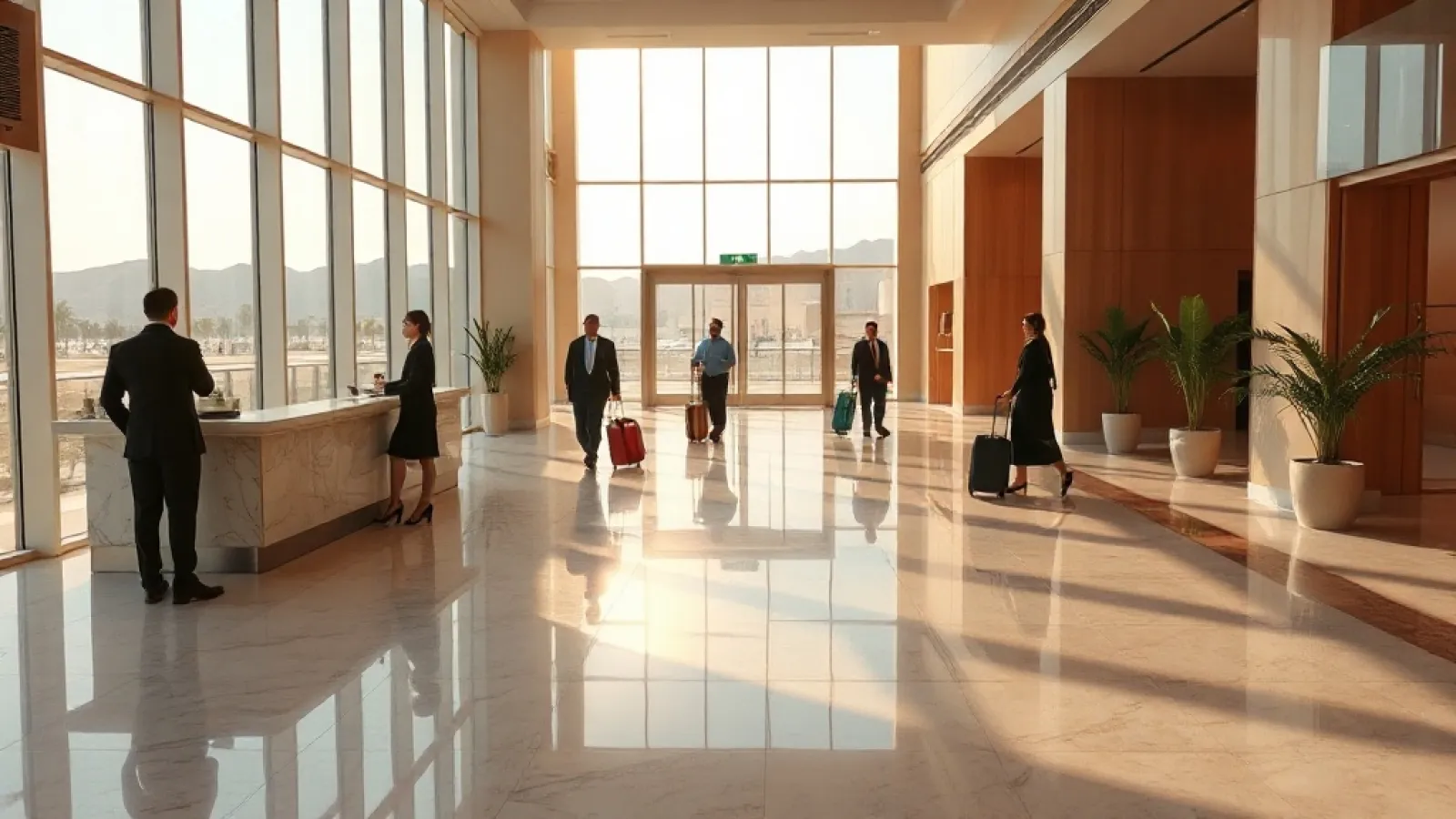
Saudi Arabia's Ministry of Tourism is moving to mandate minimum staffing levels for tourist hospitality facilities, with requirements potentially reaching up to three employees per hotel room, according to a report published by Saudi Gazette on 9 August 2026.
The proposal would tie staffing ratios to the number of rooms and the establishment's classification, meaning higher-category hotels would face more stringent requirements. The move is part of a broader regulatory push under the country's Tourism Law, which has been reshaping operational standards across the sector.
The Ministry of Tourism is coordinating with the Ministry of Human Resources and Social Development on the initiative, which also references the Ajeer system — Saudi Arabia's digital platform for managing temporary and seasonal workers. This suggests the staffing rules could be enforced through existing labour-market mechanisms, linking hotel employment to the national framework for work permits and contracts.
While the exact ratio per room category has not been disclosed, the upper bound of three employees per room would represent a significant operational cost increase for many hotels, particularly those in mid-scale and economy segments. Current industry benchmarks typically range from 0.5 to 1.5 staff per room, depending on service level and property type.
The proposal comes as Saudi Arabia continues to expand its hospitality capacity ahead of major tourism targets. The kingdom has been aggressively growing its hotel supply to accommodate rising visitor numbers, and mandatory staffing ratios could affect the economics of new developments and existing operations alike.
Hotel operators and investors will be watching closely for the final regulation, which is expected to clarify how the ratios will be calculated — whether based on total room count, occupied rooms, or a blended metric. The involvement of the human resources ministry suggests a focus on formal employment and Saudisation, aligning with national labour policies that encourage hiring Saudi nationals.
For international hotel brands and management companies operating in the kingdom, the new rules could raise payroll costs and complicate staffing models, especially for properties that rely on outsourced or part-time labour. The Ajeer system's integration implies that compliance will be tracked digitally, potentially enabling automated enforcement.
The tourism ministry has not yet announced a timeline for finalising the regulation or a public consultation period. Industry stakeholders are expected to seek clarification on how the ratios will apply to different property types, including serviced apartments, resorts, and boutique hotels.
Why it matters
Mandatory staffing ratios of up to three employees per room would directly raise operating costs for hotels across Saudi Arabia, affecting profit margins and potentially influencing investment decisions in new supply. For a market that is rapidly adding rooms to meet ambitious visitor targets, such a rule could slow development or shift investor preference toward higher-margin luxury segments where the ratio is more easily absorbed.
The link to the Ajeer system signals that the regulation is not just about service quality but also about formalising employment and advancing labour-market objectives. This could increase compliance burdens for operators and make workforce planning more complex, particularly for seasonal demand patterns. For the travel trade, higher staffing costs may translate into upward pressure on room rates, which could affect destination competitiveness at a time when Saudi Arabia is courting international tour operators and price-sensitive segments.