The regulation of tourist accommodation in Cyprus is facing renewed scrutiny after an Audit Office report exposed widespread non-compliance in both hotel and short-term rental licensing. The Cyprus Tourist Association (STEK) has issued a statement backing the findings and calling for urgent legislative reform.
According to the Audit Office report, as of April 27, 2026, only 168 out of 728 hotels and tourist accommodations (23%) held a full operating licence. Another 158 (22%) operated under temporary arrangements, while the remaining 402 entities (55%) had no licence or temporary permission at all. The report concluded that neither facilitations nor temporary measures adopted in recent years have worked effectively.
In the short-term rental sector, the picture is similarly stark. As of May 6, 2026, the Self-Catering Accommodation Registry listed 8,464 licensed properties. However, a sample check of online booking platforms found that a significant number of self-catering units operate and advertise without being registered or with inaccurate licensing details. Of twenty sampled accommodations that could be identified, only six (30%) were properly registered. Ten (50%) displayed no registration number and appeared unregistered, while four (20%) showed a number that did not match Registry records.
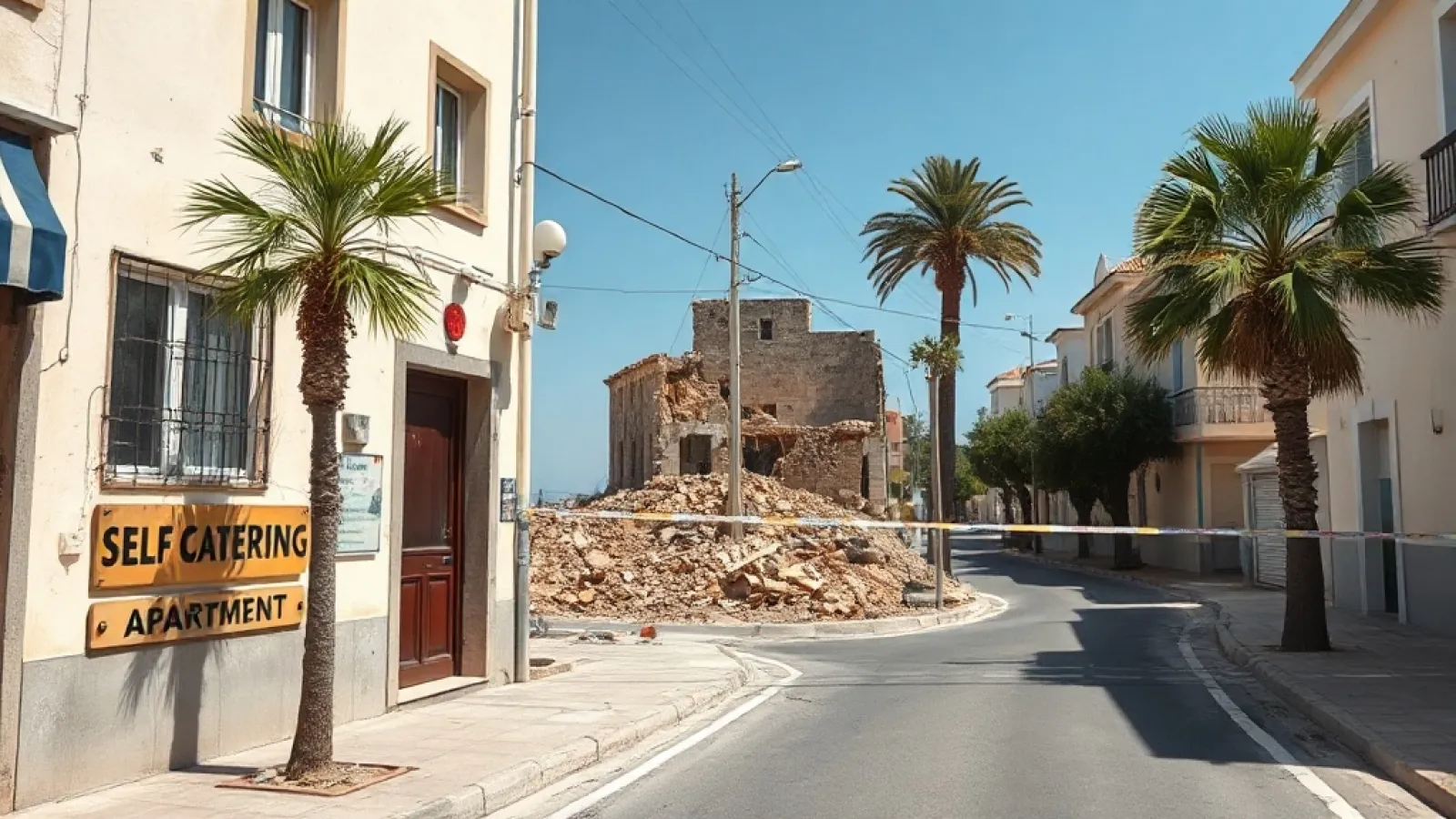
The issue gained added urgency after a building collapse in Germasogeia on April 11, 2026, where three self-catering apartments were found to have been operating without proper oversight.
STEK said the Audit Office findings confirm its longstanding concerns. The association argued that the current system cannot fulfil its purpose because accommodation continues to operate and advertise without required licences, without substantive checks, and without effective coordination between authorities. It warned that inadequate regulation creates unfair competition for the legal hotel industry, affects the housing market, makes it harder for permanent residents to find affordable housing, disrupts local communities, and poses risks to visitor safety.
STEK put forward seven recommendations for inclusion in the bill being prepared by the Deputy Ministry of Tourism:
- Effective and systematic checks to identify and stamp out illegal operations;
- Substantive law enforcement with deterrent administrative and financial sanctions;
- Mandatory display of registration numbers on all online platforms, with platform cooperation to remove illegal listings immediately;
- A maximum annual duration for short-term rentals, following European standards;
- Power for local authorities to restrict or ban short-term rentals in areas where housing strain or nuisance is severe;
- Mandatory payment of an overnight stay fee;
- Uniform safety, health and insurance standards for all hospitality providers.
The Deputy Ministry of Tourism acknowledged that many accommodations advertising on online platforms are not registered or do not display a registration number. It said this would be addressed through the implementation of EU Regulation (EU) 2024/1028, which entered into force in May 2024, with obligations applying from May 20, 2026.
Why it matters
For travel-trade professionals sourcing accommodation in Cyprus, the data signals a fragmented and unreliable licensing environment. With 55% of hotels operating without a licence and the majority of short-term rentals unregistered, tour operators and bedbanks face elevated compliance risk and potential liability for guest safety. The proposed reforms — especially mandatory registration display and platform cooperation — could reshape distribution dynamics, making it harder for unlicensed inventory to appear on booking channels. The housing-market strain also suggests that supply of legal short-term rentals may tighten if local authorities gain powers to restrict them in affected areas.