Data in this article are drawn from an Egyptian Ministry of Planning and Economic Development report published in October 2025.
Egypt planned to raise public and private investment in its tourism and antiquities sector by approximately 60 percent to EGP 116.2 billion ($2.4 billion) in fiscal year 2025/26, up from EGP 72.4 billion ($1.5 billion) in 2024/25, according to a ministry report released at the time by Planning and Economic Development Minister Rania Al-Mashat.
Private-sector spending was expected to account for around 99.5 percent of the total — a figure that underscored the degree to which Egypt's tourism expansion strategy relied on commercial rather than state capital.
Sector momentum heading into the plan year
The investment target was set against a backdrop of strong momentum. The tourism sector grew 17.3 percent during the 2024/25 fiscal year, supported by infrastructure spending and hotel expansion. Visitor numbers rose to 17.4 million in that year, up from 15 million the year before, while tourist nights increased to 179 million from 154 million.
For FY 2025/26 — the year now closed as of June 2026 — the plan had targeted approximately 19 million tourist arrivals and 193 million overnight stays. Those benchmarks now serve as reference points against which actual performance can be measured; Egypt's tourism authorities have since reported a 16 percent climb in arrivals in Q1 2026, suggesting the trajectory remained broadly positive through at least the first quarter of the fiscal year.
Hotel capacity also expanded ahead of the plan period, with the number of rooms rising 4.3 percent to approximately 228,100 as of end-2024.
Source-market and geographic breakdown
The October 2025 report provided a regional breakdown of inbound tourism based on 2023 data, when Egypt received 14.9 million visitors. Europe accounted for 58 percent of arrivals, followed by the Middle East at 22.3 percent, other regions at 15.7 percent, and North America at 4 percent. Germany, Russia, and Saudi Arabia were identified as the top three source markets in 2024.
Grand Egyptian Museum context
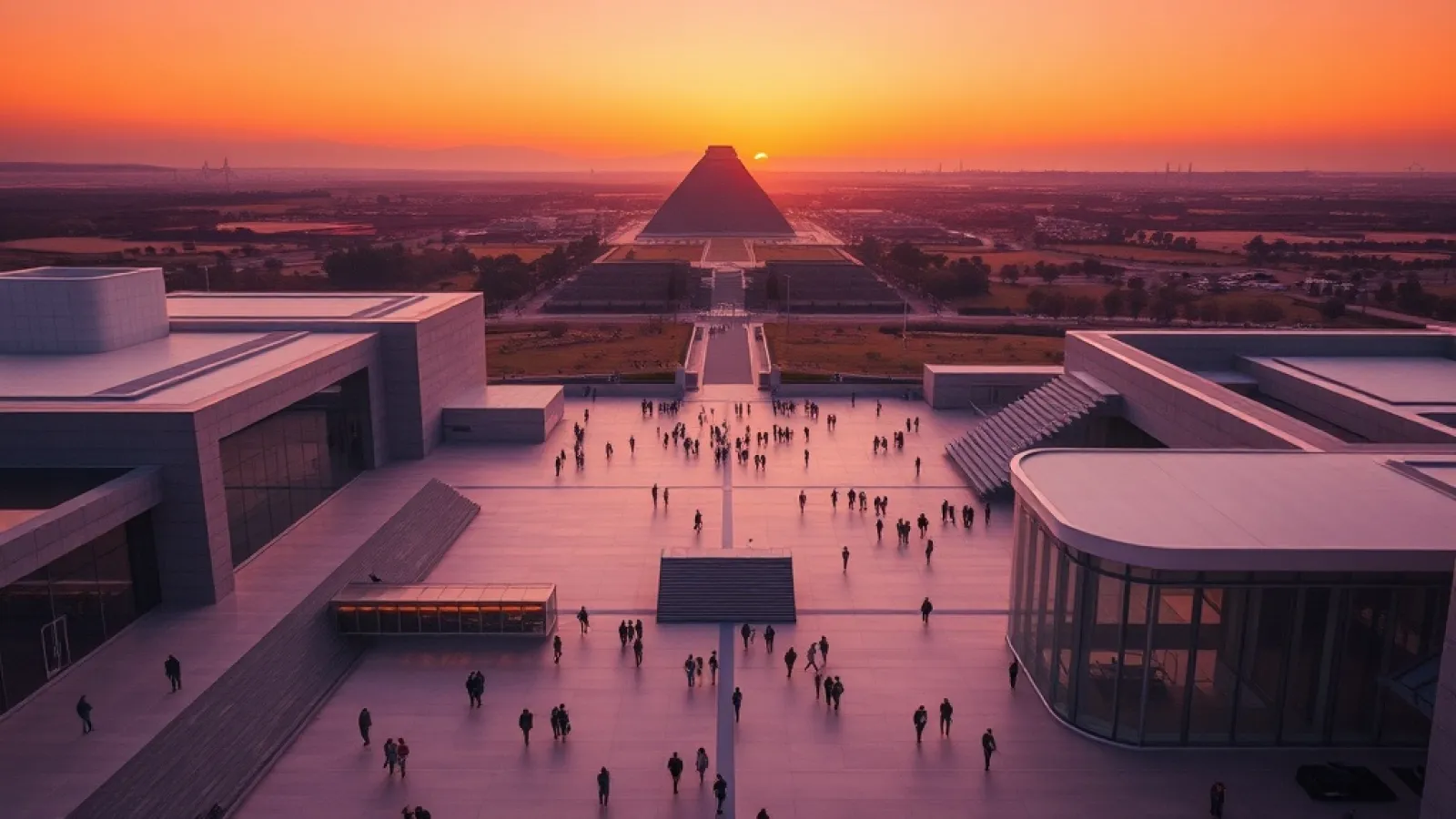
The investment plan was framed in part around the opening of the Grand Egyptian Museum (GEM), which the report described as slated for the Saturday following its publication. Several world leaders were expected to attend the opening. The GEM — covering more than 490,000 square metres and displaying over 100,000 artefacts spanning 5,000 years of Egyptian civilisation, including the complete collection of King Tutankhamun's treasures shown together for the first time — was billed as the world's largest archaeological museum complex.
Why it matters
For tour operators, bedbanks and destination management companies active in the Egypt market, the October 2025 ministry data established a clear policy direction: near-total reliance on private capital to fund tourism infrastructure, with the state acting primarily as a facilitator rather than a direct investor. The 19 million arrivals and 193 million overnight-stay figures, originally presented as forward targets, are now benchmarks against which the sector's actual FY 2025/26 performance should be assessed. The Q1 2026 arrivals data already in the public domain suggest the direction of travel was maintained, but trade buyers should treat the full-year outcome as a figure to verify rather than assume. The European source-market dominance — 58 percent of arrivals — also remains a structural consideration for operators designing Egypt programmes, as does the continued rise of Middle Eastern travellers, who represented more than one in five visitors in 2023.