Türkiye has joined Greece, Georgia, Albania, Montenegro, Kosovo and Serbia in the Visa Express programme, a regional initiative designed to streamline visa access and accelerate tourism flows across the Aegean and Southeastern Europe. The move, which extends the programme through 2027, is expected to deepen cross-border travel and strengthen economic ties between participating countries.
The Visa Express Programme
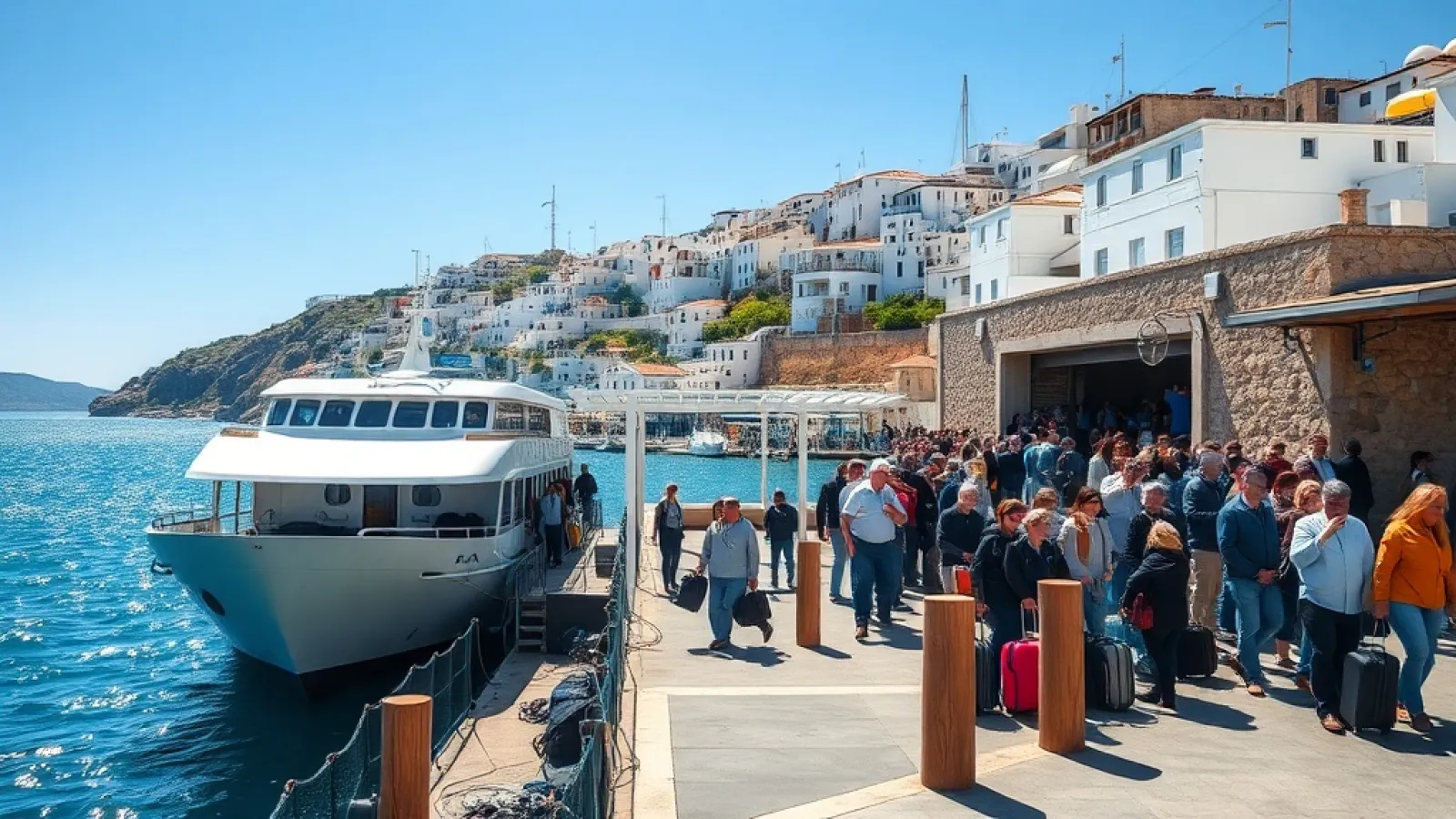
The Visa Express programme, which began in 2024, allows Turkish citizens to obtain short-stay visas upon arrival at entry points on Greek Aegean islands including Rhodes, Kos, Chios and Lesbos. The convenience of arrival visas — combined with the short ferry distances between the Turkish coast and these islands — has driven a rapid uptake among Turkish travellers. More than one million Turkish visitors travelled to the Greek Aegean islands in 2025 alone, with weekend trips proving particularly popular.
Greece has extended the programme through 2027, cementing its position as a leading European tourism hub. Local businesses across the hospitality, retail and transportation sectors on the islands have reported increased demand, with off-peak season arrivals providing a notable economic lift.
Country-by-Country Impact
Georgia, though geographically farther from Türkiye than the Aegean islands, has become an increasingly popular destination for Turkish tourists, with Tbilisi among the key draws. The programme's inclusion of Georgia is intended to make that corridor more convenient.
Albania, positioned on the Adriatic, offers Turkish travellers access to beaches, historic ruins and a relatively undiscovered European destination. The simplified visa process is expected to support Albania's developing tourism infrastructure.
Montenegro's rugged coastline and towns such as Kotor and Budva have been gaining traction among Turkish visitors. Visa-on-arrival access is expected to accelerate that trend.
Kosovo has emerged as an off-the-beaten-path option for Turkish travellers, with Pristina among the cities drawing interest. The programme is seen as a key tool for growing Kosovo's international visitor numbers.
Serbia, anchored by Belgrade's cultural and historical offerings, is expected to see a steady increase in Turkish arrivals following its inclusion in the programme.
Why It Matters
For tour operators, bedbanks and DMCs active in the Aegean and Balkan corridors, the extension of Visa Express to 2027 provides a stable planning horizon. The fact that more than one million Turkish visitors reached the Greek Aegean islands in a single year demonstrates the scale of latent demand that simplified visa access can unlock. Turkish travellers' sensitivity to currency and inflation pressures — explicitly noted as a factor driving interest in nearby, competitively priced destinations — suggests that demand for short-haul, visa-accessible itineraries will remain robust.
The multi-country architecture of the programme also creates a structural opportunity for multi-destination itinerary packaging. Operators who can combine Greek island stays with Balkan extensions — across Albania, Montenegro, Kosovo or Serbia — stand to capture travellers seeking broader regional experiences. Greece's islands, as the highest-volume entry point in the programme, are the natural anchor for such products, while the newer participating countries offer differentiation for operators competing on experience rather than price alone.
The programme's extension through 2027 also gives accommodation investors and local hospitality businesses across all six partner countries a clearer demand signal for capacity and service planning, particularly in shoulder and off-peak periods where Visa Express arrivals have already demonstrated measurable impact.