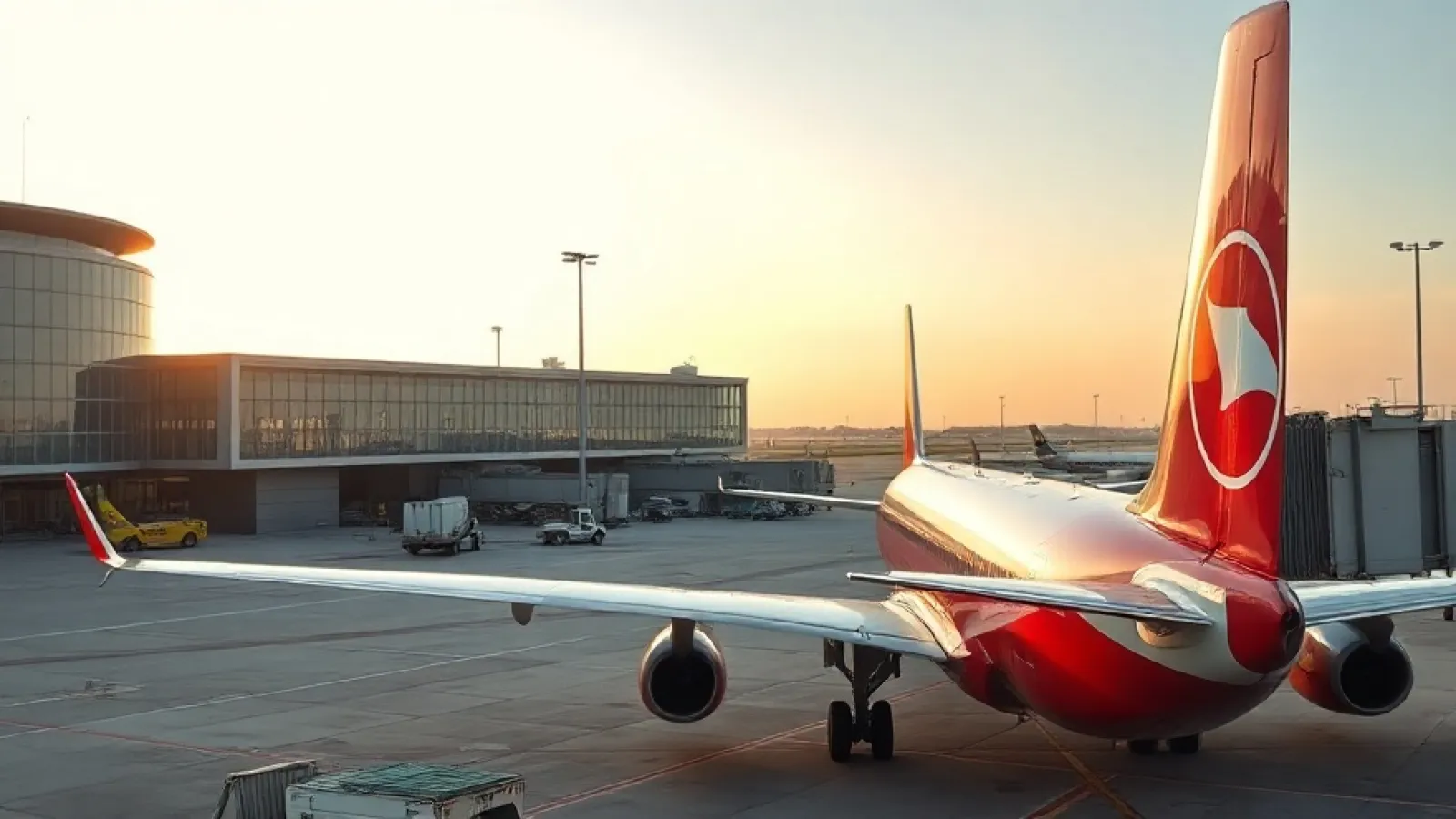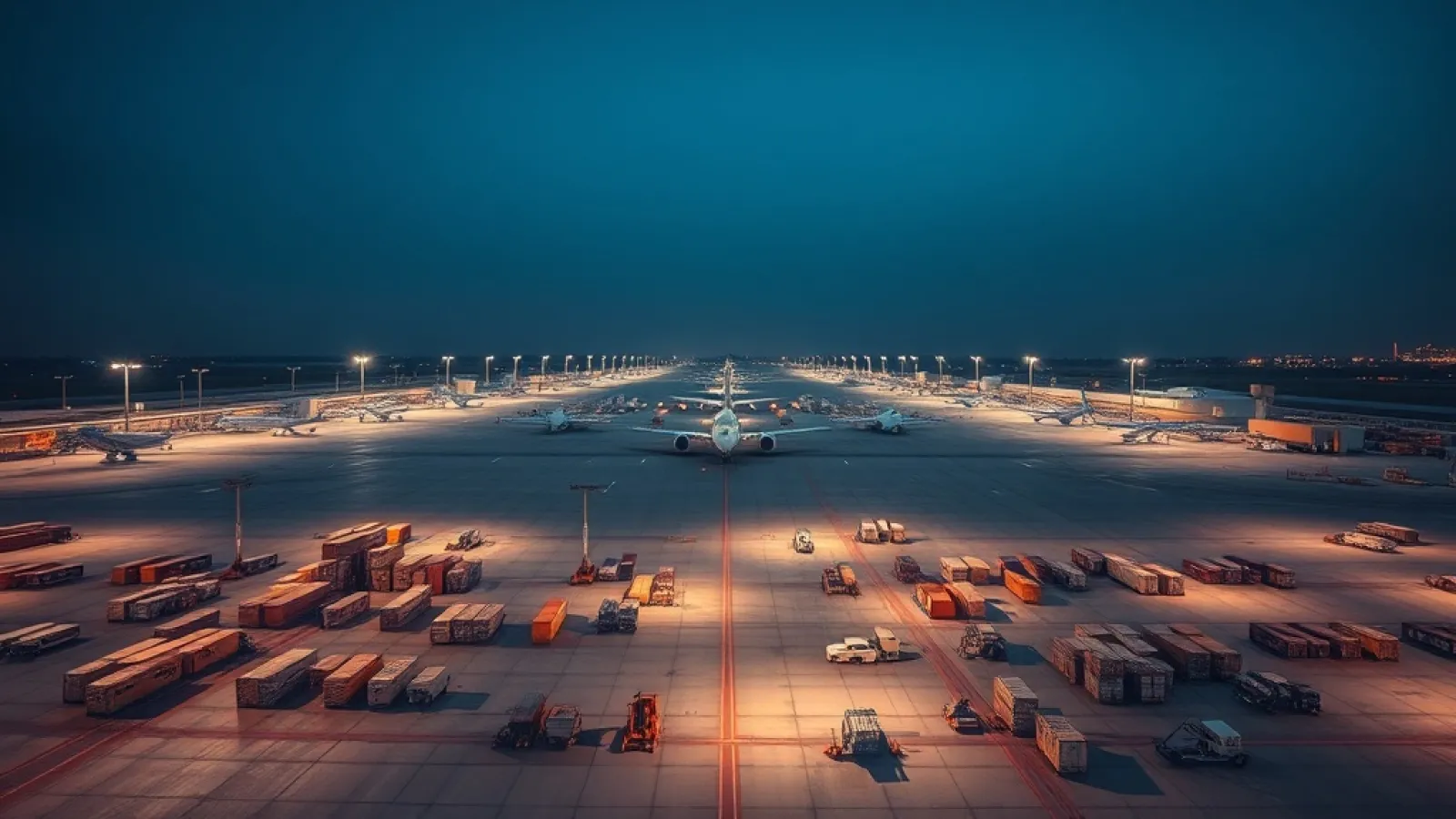
Turkish Airlines has launched a TRY 100 billion ($2.32 billion) infrastructure investment programme centred on Istanbul Airport, committing to eight major projects spanning cargo, maintenance, catering, flight training and digital systems as it pursues its long-term "Vision 2033" growth strategy.
Groundbreaking ceremonies for the facilities were held in early January 2026, attended by senior government officials and airline executives.
Cargo capacity more than doubles
The centrepiece of the programme is the second phase of the SmartIST cargo terminal at Istanbul Airport, which will increase annual handling capacity from 2.2 million tonnes to 4.5 million tonnes — more than doubling current throughput. Delivery is scheduled in stages across 2027 and 2028. Once complete, the expanded complex is intended to rank among the world's largest air cargo hubs.
Alongside SmartIST, Turkish Airlines plans to open a dedicated e-commerce logistics complex in 2026 to support its Widect platform, which provides integrated door-to-door freight services. The facility is designed to strengthen the carrier's position in cross-border e-commerce trade flows.
MRO expansion targets next-generation engines
The technical services pillar centres on Turkish Technic, the airline's maintenance unit. A new engine maintenance centre, due for completion in 2027, will service Rolls-Royce Trent XWB-84 and -97 engines fitted to Airbus A350s, as well as the Trent 7000 powering the A330neo. The airline says the facility will rank among Europe's largest new-generation engine MRO sites.
Additional heavy maintenance hangars, due to be completed in 2026, will lift Turkish Technic's simultaneous heavy maintenance capacity by approximately 20%, enabling work on up to 12 aircraft at a time.
Catering, training and digital resilience
A new main catering facility, expected to enter service during 2027–2028, is designed to handle meals for more than 500,000 passengers per day, placing it among the largest inflight catering operations globally.
The programme also includes a new flight training centre — with its first phase coming online in 2026–2027 — and an additional crew terminal building at Istanbul Airport planned for 2026, intended to improve coordination between flight operations, ground handling and maintenance. A new data centre, scheduled for completion later this decade, will underpin flight operations, maintenance planning and commercial systems.
Chairman Ahmet Bolat said the investments are designed to ensure fleet growth is matched by sufficient infrastructure and skilled personnel, and that the programme is expected to create around 26,000 new jobs in 2026 alone, rising to 36,000 as all phases are completed.
"With these steps, we are building not only facilities but also an ecosystem for the future of our country's economy and aviation sector," Bolat said.
Why it matters
For the travel trade, the scale and breadth of this commitment signals that Turkish Airlines is structurally reinforcing Istanbul's position as a long-haul connecting hub rather than simply adding aircraft. Doubling SmartIST's cargo throughput to 4.5 million tonnes will be significant for freight forwarders, integrators and e-commerce operators routing goods between Asia, Europe and the Americas via Turkey. The expansion of Turkish Technic's MRO capacity — particularly for Trent XWB and Trent 7000 engines — adds third-party maintenance optionality at a time when engine shop-visit bottlenecks are an industry-wide constraint. For tour operators and bedbanks, a catering facility capable of serving 500,000 passengers daily and a larger crew terminal suggest the airline is planning for substantially higher seat volumes through Istanbul, which could translate into increased airlift to Turkish leisure destinations and beyond. The 36,000 jobs target also points to a workforce build-out that underpins operational reliability at scale.