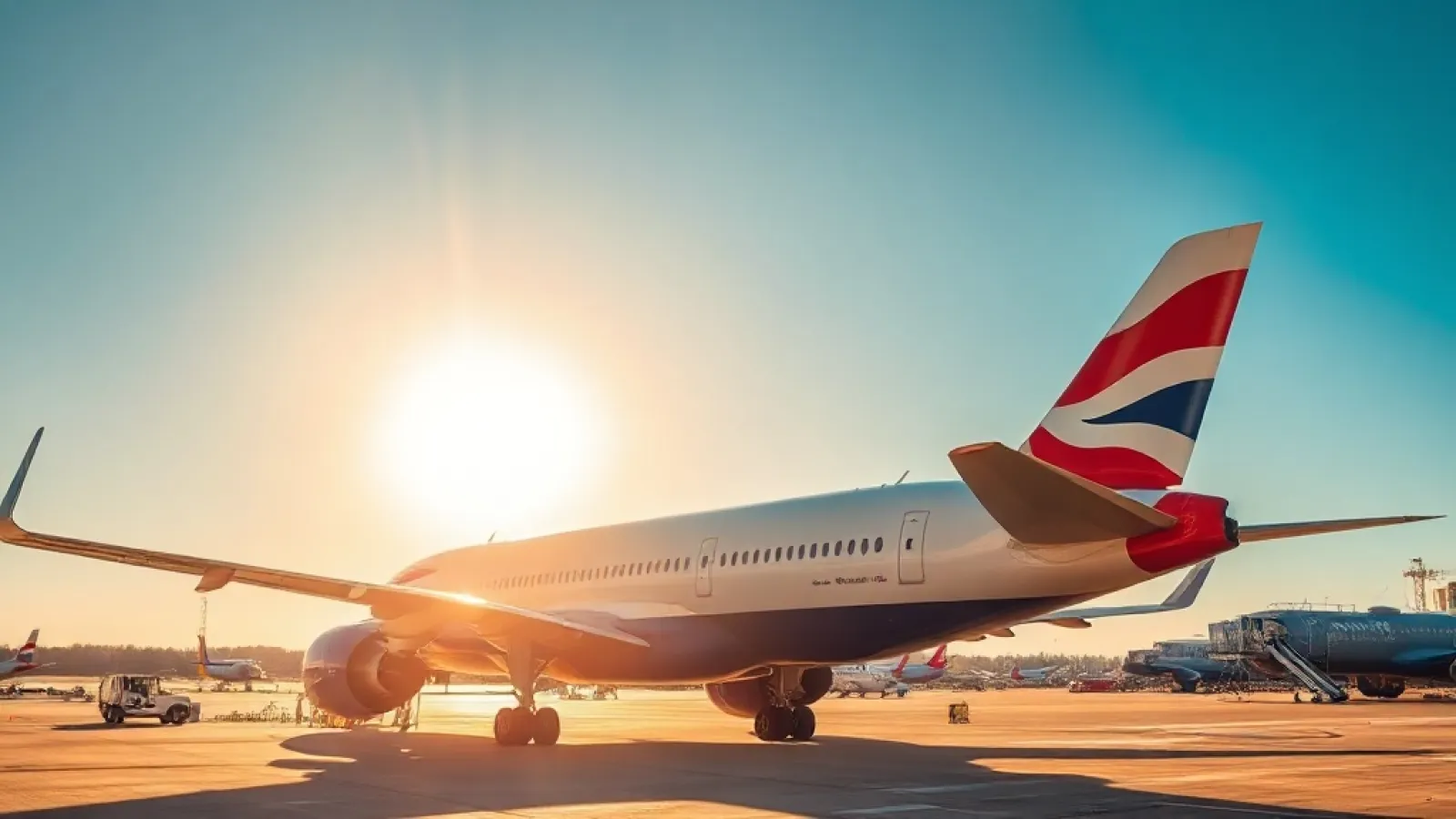
British Airways has enacted sweeping reductions to its Gulf network while accelerating capacity additions to India and Kenya, signalling that the airline — and the broader industry — is planning for prolonged disruption to Middle Eastern aviation rather than a swift post-conflict recovery.
Services from London Heathrow to key Middle Eastern destinations were paused following the outbreak of fighting at the end of February, triggered by the US-Israel-Iran conflict. The latest schedule changes, published by AeroRoutes, confirm that BA is not banking on a rapid normalisation even after a fragile ceasefire was agreed — the decisions having been taken before that ceasefire was in place.
Gulf Route Reductions
From 1 July 2026, the Heathrow–Doha route operates a single daily Boeing 777-200ER service, down from two daily flights using a mix of 777-200ER and 787-8 aircraft — a 50% frequency cut. The Heathrow–Dubai route is reduced more sharply still, to one daily 787-9 from three daily flights operated by 777 and 787 aircraft, representing a two-thirds reduction in capacity.
The Heathrow–Jeddah route has been cancelled entirely. Five weekly 787-8/9 services were withdrawn effective 25 April 2026, with no operations planned across both 2026 and 2027. On the Heathrow–Riyadh corridor, frequencies were cut from two daily services to four weekly 777 flights from 20 May, before transitioning to a single daily 787-9 from 1 July. BA has also delayed the resumption of Abu Dhabi flights until next winter.
India and Kenya Expansion
Capacity freed from the Gulf is being redeployed eastward and southward. From 1 June, BA added a second daily Heathrow–Nairobi flight, served by a mix of A350-1000 and 777-200ER aircraft. A second daily Heathrow–Bengaluru service also launched on the same date, operated by 787-8 and, on selected dates, 787-9 aircraft.
On the Heathrow–Delhi route, frequencies rose from two to three daily flights until 31 May, with the third rotation scheduled to return from 19 September. From 1 June, the BA143/142 service was upgraded to the larger A350-1000, replacing the 777-200ER. The revised schedule runs to 24 October, the start of the northern hemisphere winter season.
The Heathrow–Mumbai route saw a brief suspension of its third daily rotation between 9 and 14 May 2026, though this was shorter than originally planned.
Winter 2026 Network
The Gulf pivot sits alongside a broader winter 2026 expansion announced last month, in which BA said it would add Melbourne and Colombo as new destinations and increase frequencies to Cape Town, Tokyo Haneda, Bridgetown, Kingston and San José. The airline described the overall winter programme as a 9% growth in its long-haul network.
Why It Matters
For tour operators, bedbanks and DMCs with product exposure to Gulf destinations — particularly Jeddah, which faces a two-year suspension — BA's schedule signals that demand recovery is not imminent and that alternative connectivity options must be sourced now. The complete withdrawal from Jeddah through 2027 is especially significant for Umrah-linked travel packages and corporate Gulf programmes routed through Heathrow.
Conversely, the doubling of Nairobi and Bengaluru frequencies creates meaningful new inventory for operators building East Africa and South Asia itineraries. The deployment of wide-body A350-1000 aircraft on Delhi underscores confidence in India demand, offering travel-trade partners higher seat counts and potentially improved yield conditions as supply increases. The structural shift also raises questions for Gulf hub carriers and regional airports about how long the capacity gap persists — and whether other European network airlines follow BA's lead in redeploying assets away from the region.