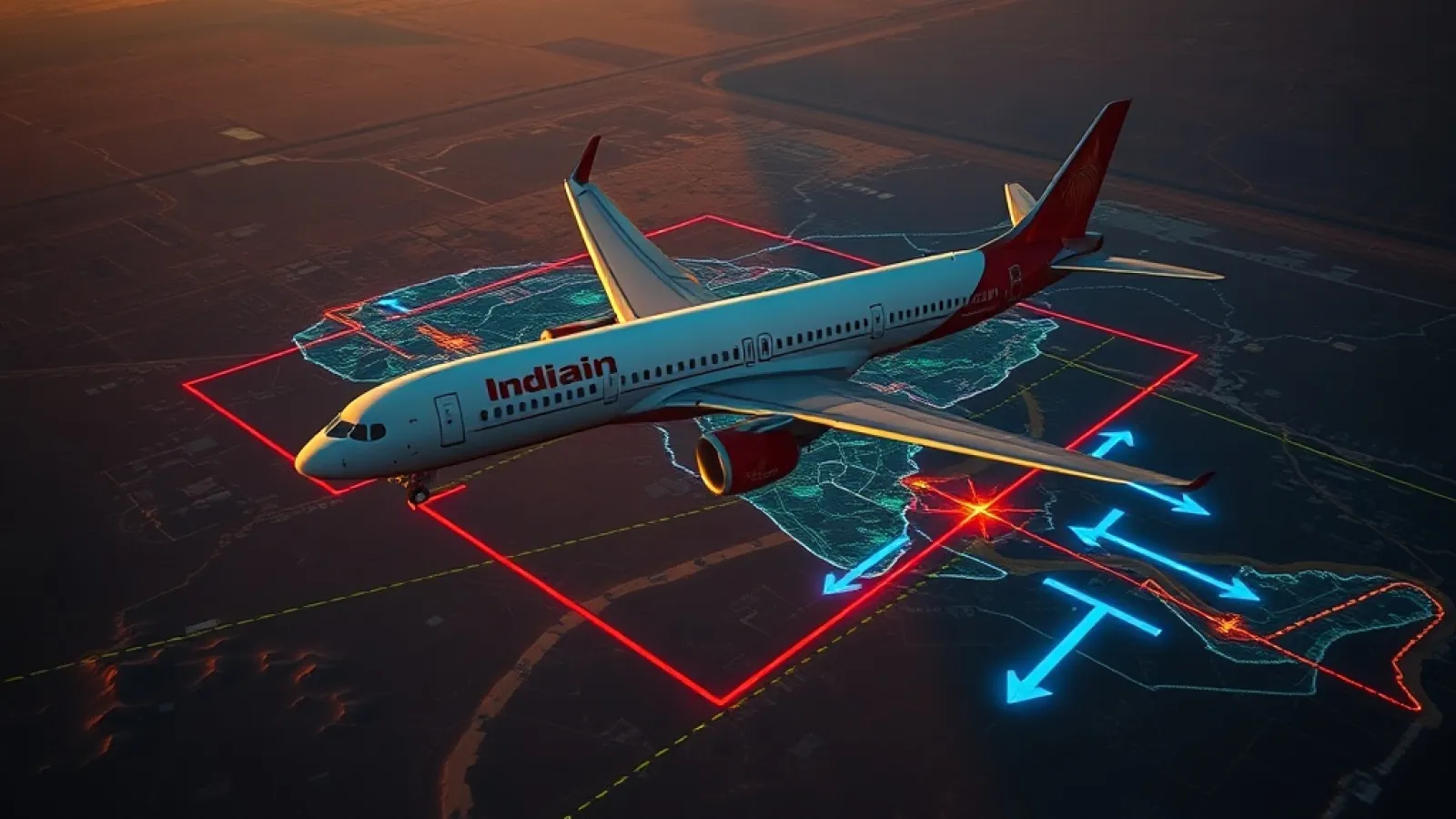
India’s Ministry of Civil Aviation has directed all Indian airlines operating international services to strictly follow airspace advisories, NOTAMs, and route restrictions issued by authorities, following a massive military operation launched by the US and Israel against Iran on Saturday, 4 July 2026.
In a statement released on 28 February 2026 — the date of the directive — the ministry said airlines must ensure timely rerouting or diversion of flights in accordance with global safety protocols and contingency planning procedures. The directive applies to all Indian carriers flying international routes that may be affected by the conflict.
“The safety of passengers and crew remains paramount. The Ministry of Civil Aviation is closely monitoring the situation to ensure safe, orderly, and efficient air operations,” the statement read. “The situation is under constant watch. Further updates will follow as necessary.”
The minister of civil aviation conducted a comprehensive review of preparedness and response measures with stakeholders, focusing on passenger safety, operational continuity, and real-time coordination in light of multiple airspace restrictions and NOTAMs in parts of the Middle East.
Airports across India, particularly major international gateways, have been placed on operational alert to manage potential flight diversions, unscheduled landings, and passenger facilitation requirements. The Airports Authority of India (AAI) and private airport operators have been advised to enhance coordination with airlines for ground handling, parking bays, passenger amenities, crew logistics, and immigration support.
A high-level video conference was convened with Ministry of Civil Aviation Secretary Samir Kumar Sinha, senior ministry officials, AAI, the Directorate General of Civil Aviation (DGCA), airline operators, and major airport operators. The DGCA has been advised to ensure full compliance with safety regulations, crew duty time limitations, and operational advisories. Continuous monitoring mechanisms have been activated to assess evolving airspace dynamics and mitigate any cascading impact on domestic schedules.
The ministry is also in close coordination with the Ministry of External Affairs to ensure seamless information flow and appropriate response for any emergent requirements involving Indian carriers or Indian nationals abroad.
Passengers have been advised to stay in regular contact with their airlines for updated travel information and schedule changes. Airlines are instructed to proactively communicate delays, rerouting, or diversions to minimise inconvenience.
Why it matters
For the global travel trade, the closure or restriction of Middle Eastern airspace due to the US-Israel operation against Iran creates immediate operational challenges for airlines serving India, a key source market for tourism and business travel. Rerouting flights around conflict zones increases flight times, fuel costs, and crew duty-hour constraints, potentially leading to cancellations or delays that ripple through tour operator itineraries and hotel bookings. India’s proactive directive to carriers and airports signals a preparedness that may limit disruption, but the duration of the conflict will determine the scale of impact on connectivity between India and Europe, the Americas, and the Middle East itself. Travel management companies and DMCs should expect schedule volatility and advise clients to maintain flexible bookings.